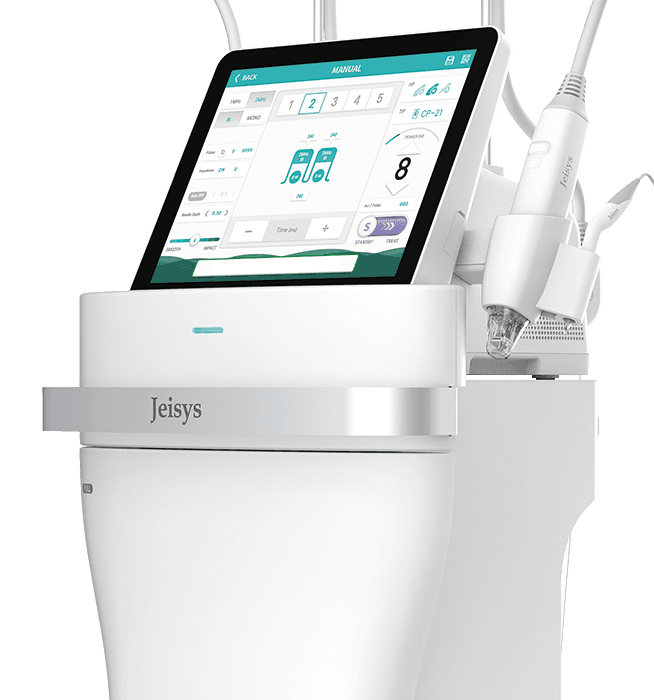
POTENZA RF Microneedling Unlocks Unmatched Versatility Through Patented Engineering
Precision-engineered for every patient through 4-mode RF customisation, a versatile 14-tip library, and patented innovations in pumping technology and real-time impedance monitoring.
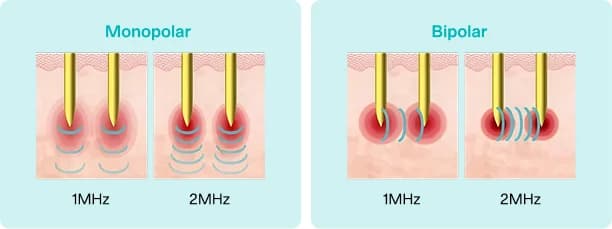
Unlike Single-Mode Systems, POTENZA’s Dual-Generator Allows You to Tailor the Thermal Footprint to the Specific Dermatological Condition by Adjusting Frequency and Polarity.
The table below serves as a guide for clinicians to select the optimal treatment setting by showing how Mode (Monopolar for depth vs. Bipolar for surface) and Frequency (1 MHz for broad heating vs. 2 MHz for focused intensity) combine to determine the exact Depth and Delivery of the RF energy into the skin.
Unlike single-mode systems, the needle array of POTENZA’s dual-generator ensures the most optimal, uniform and stable energy delivery.
| Mode | Frequency | Depth & Delivery |
|---|---|---|
| Monopolar | 1 MHz | Deep, volumetric bulk heating. |
| Monopolar | 2 MHz | Focused deep heating; high-impact coagulation. |
| Bipolar | 1 MHz | Broad, superficial dermal heating. |
| Bipolar | 2 MHz | Precise, superficial energy delivery. |
Results are Delivered Through 14 Different Types of Tips to Serve a Variety of Dermatological Applications
Maximum Versatility in One Platform
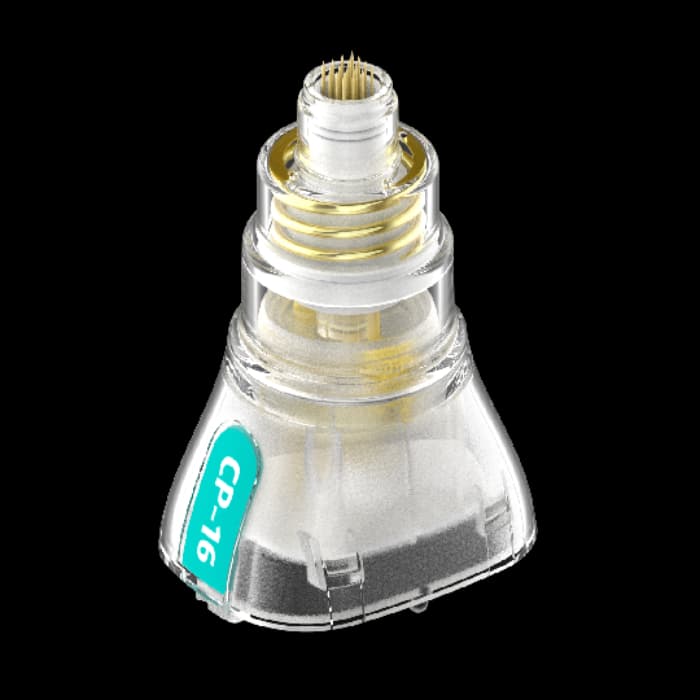
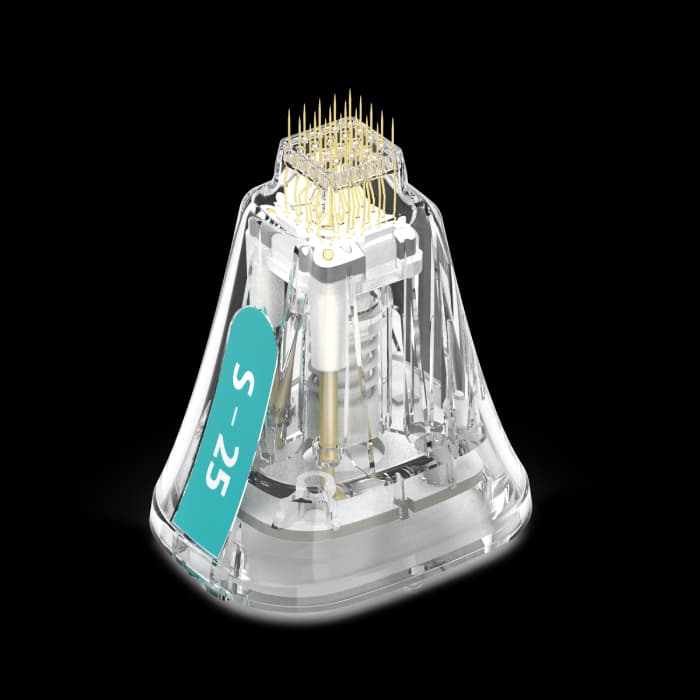
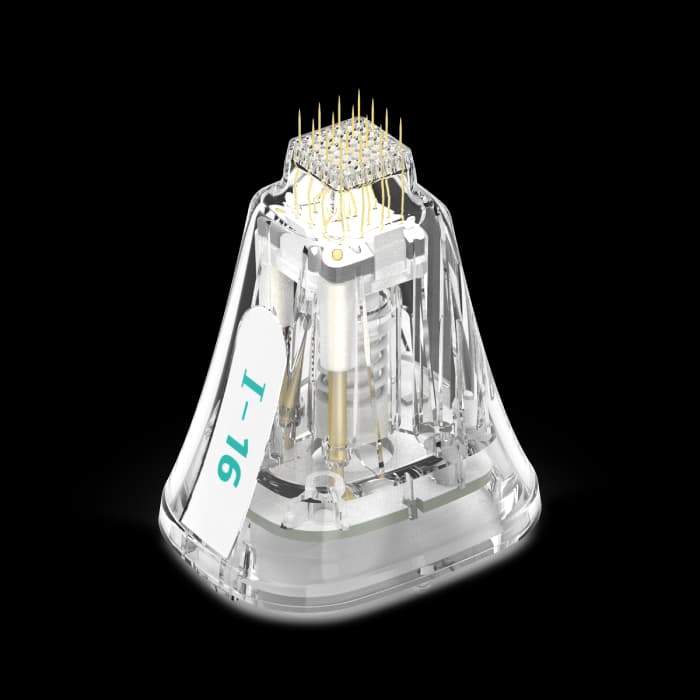
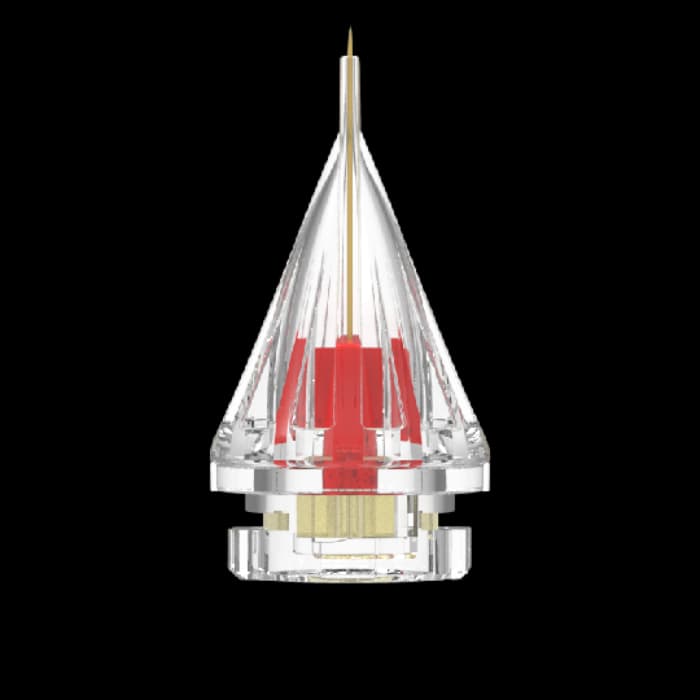
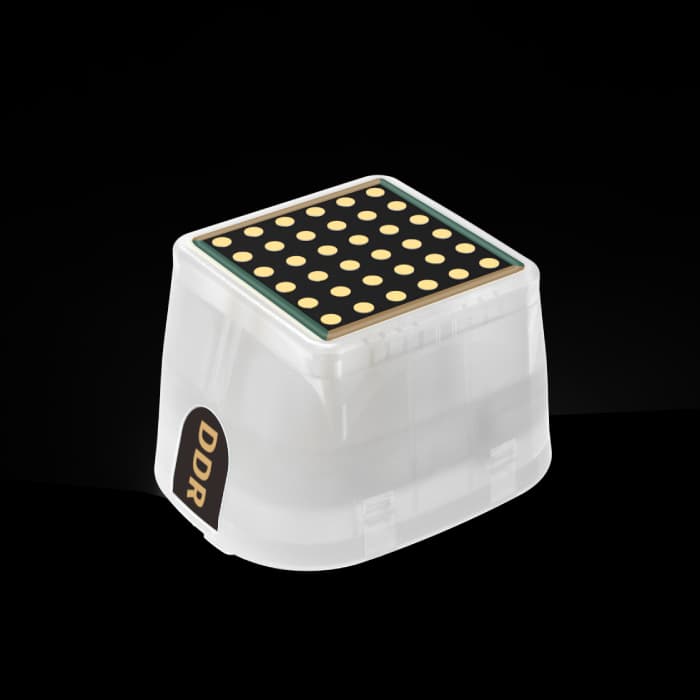
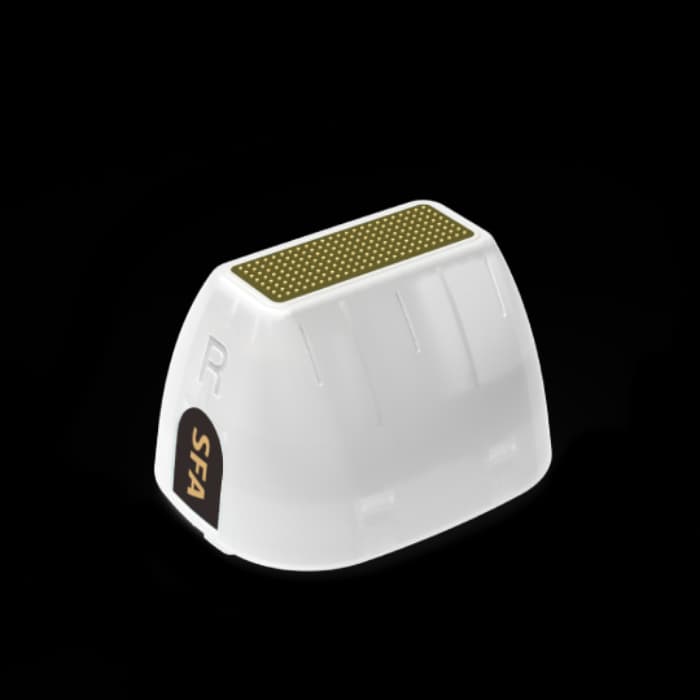
Discover the Full Range of Tip Categories
The Pumping Tip Transforms the Device into a High-Performance Delivery System, Forcing Your Favourite Topicals Deep into the Dermis with 67% Deeper Penetration 1,2.
1Published studies: Advances in Cosmetic Surgery, Journal of Clinical & Aesthetic Dermatology.
2 Dr. Christine Dierickx Whitepaper: The POTENZA Pumping Tip: Enhanced penetration of topical products. Dr. Christine Dierickx, “The POTENZA Pumping Tip: Enhanced penetration of topical products” (internal white paper). 67% increase in topical penetration with POTENZA Pumping Tip compared with standard application; baseline topical absorption 1–5% as reported in Wang JV et al., Dermatol Surg. 2022;48(1):120–125.
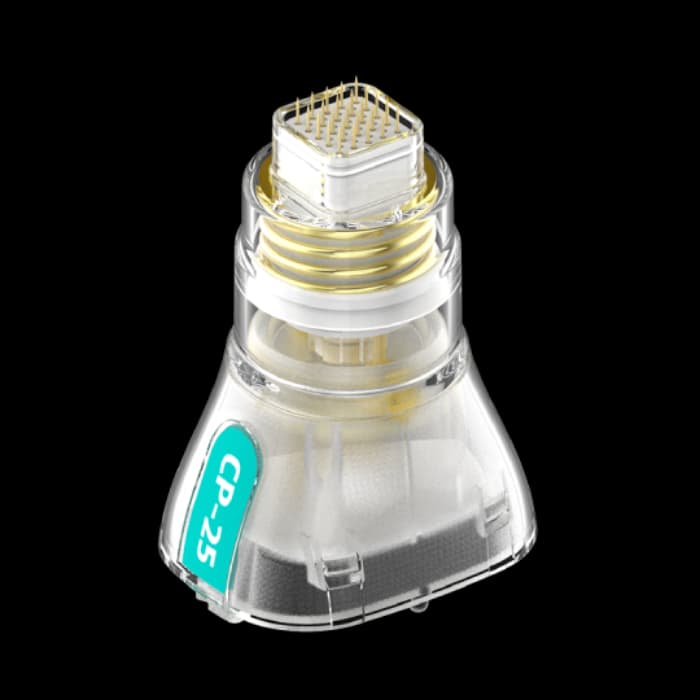
The Unique, Patented POTENZA Pumping Tip: Why it’s a Game Changer
The POTENZA Pumping Tip works by creating a vacuum seal over the skin. When needles are withdrawn, air pressure causes topicals (such as HAs, Polynucleotides, and more) to move through the open channels resulting in deep uniform delivery.
The Magic Behind the Needles
Needle Density Explained
The number of needles influences energy distribution and treatment depth:
- 16 needles – deeper penetration, stronger coagulation
- 25 needles – balanced dermal treatment
- 49 needles – more superficial energy with wider coverage
This flexibility allows clinicians to precisely tailor treatment intensity and depth.
The Parylene Advantage
POTENZA needles are engineered with a Parylene coating, selected for its superior biocompatibility and performance:
- Reduced Friction: Creates an ultra-smooth, uniform surface for effortless needle insertion and improved patient comfort.
- Consistent Performance: Protects the needle from moisture and ensures stable energy delivery across every pulse.
- Durability: Provides a more reliable insulation barrier than standard coating materials.
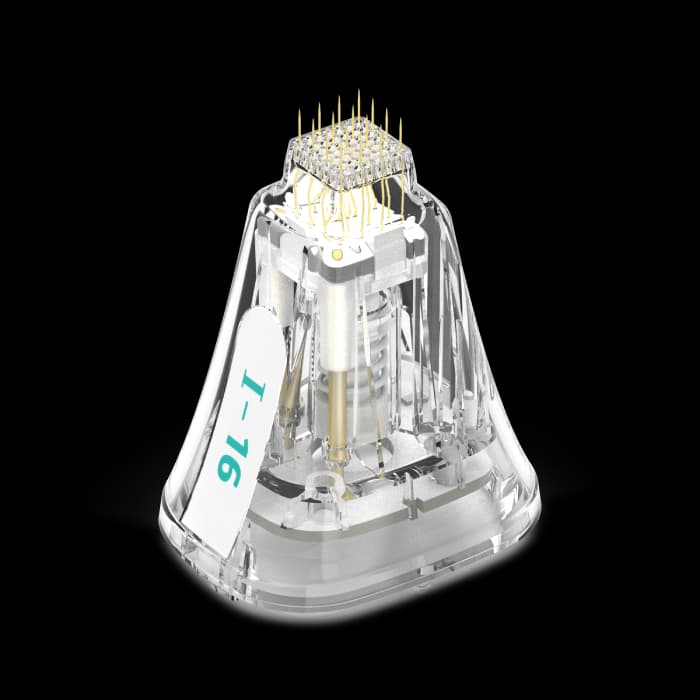
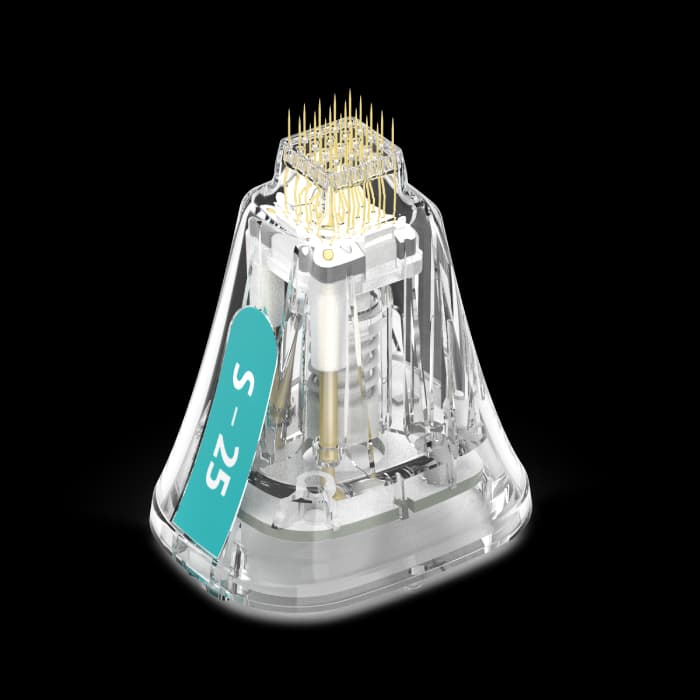
Insulated (Precision) vs. Semi-Insulated (Volumetric) Tips Explained
Adjustable Penetration: Both tips offer a versatile depth range from 0.25mm to 4.0mm to reach any dermal target.
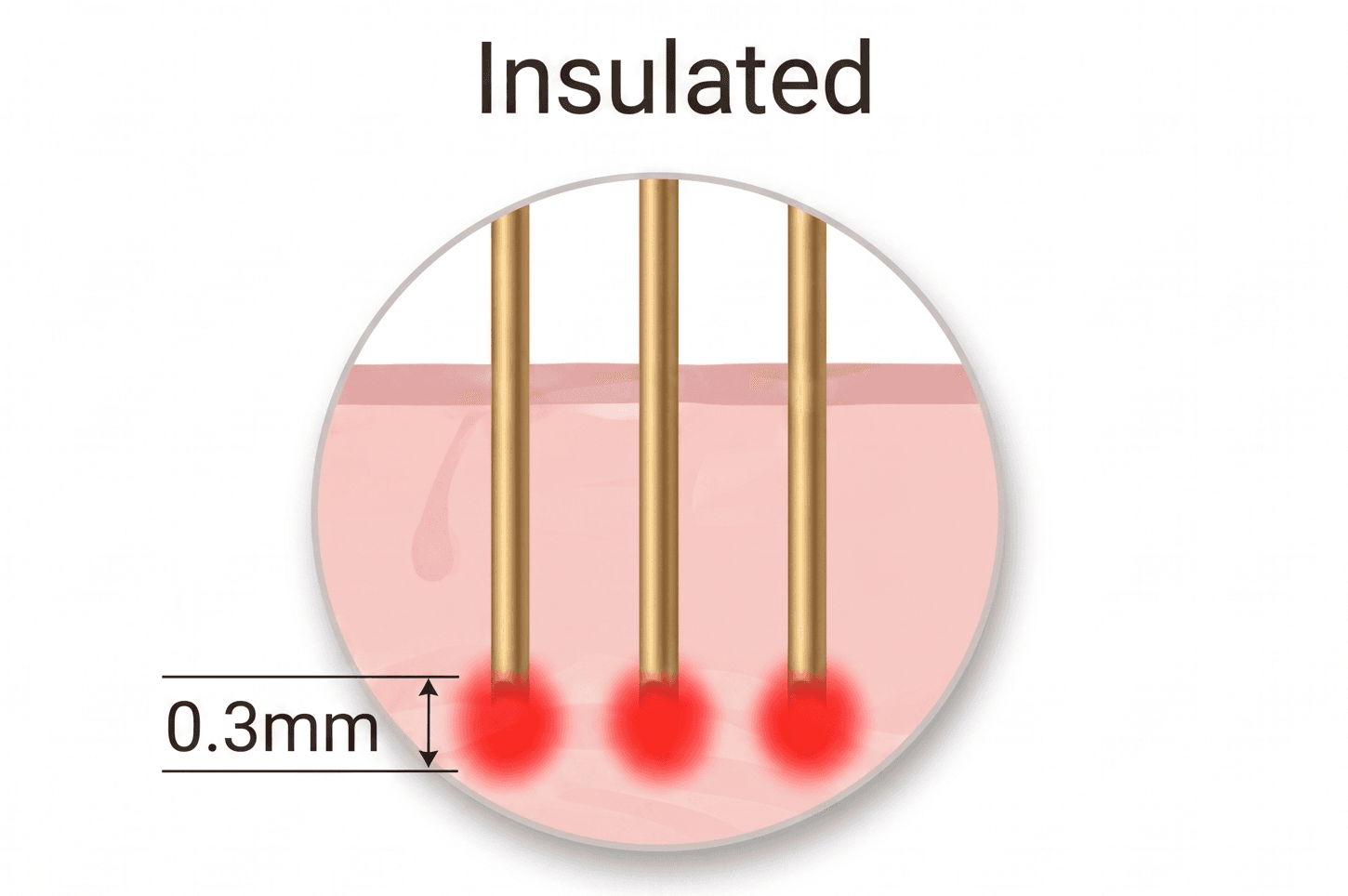
The Difference: The insulation determines where the energy is released along that needle track.
Insulated Tip – The Precision Tool
Mechanism: RF energy is restricted to the last 0.3mm of the needle.
Energy Spread: Concentrated coagulation at the needle tip only.
Clinical Use: Targeted dermatological treatments requiring surgical precision while sparing the upper dermis.
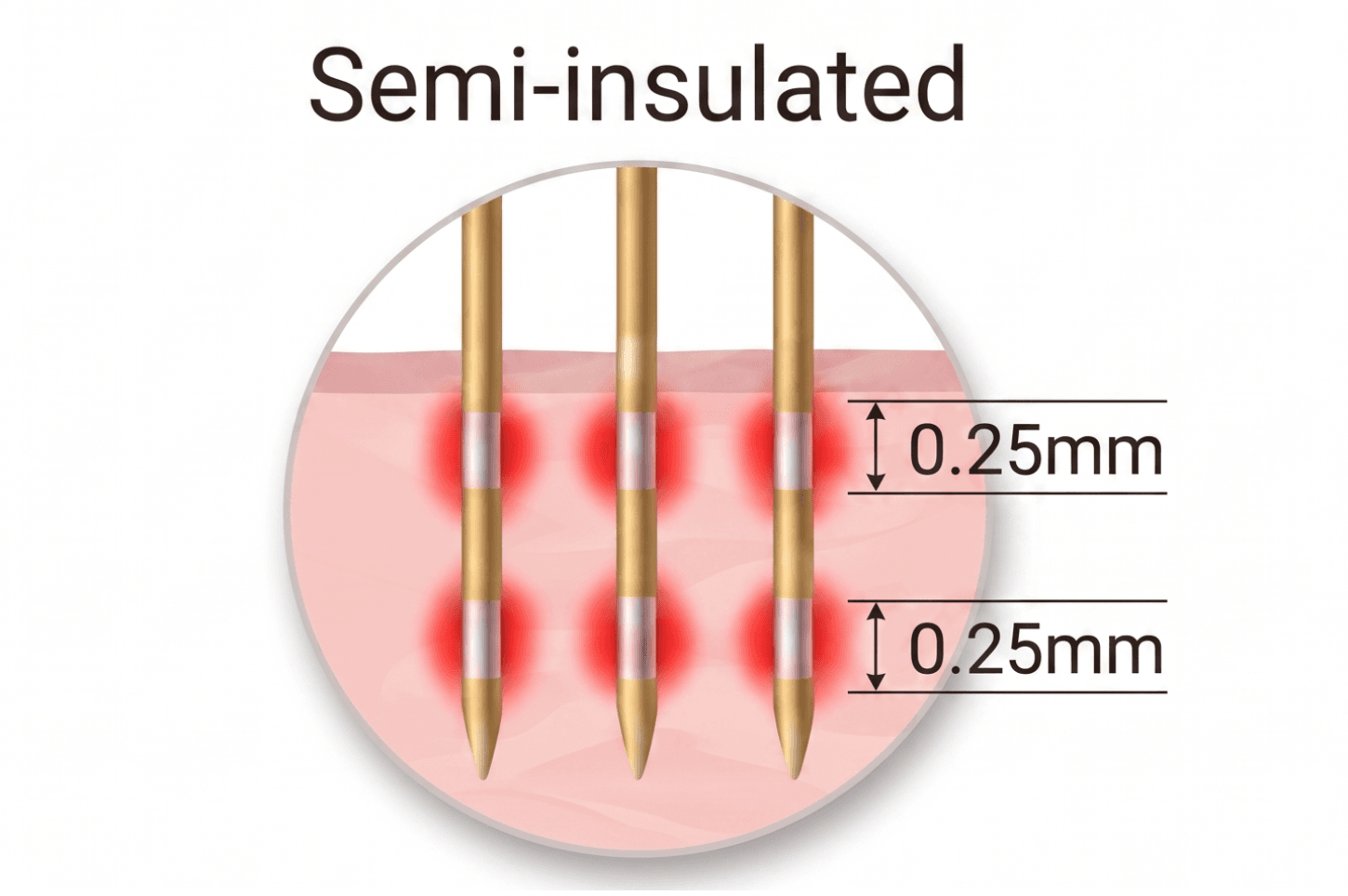
Semi-Insulated Tip – The Volumetric Tool
Mechanism: RF energy is delivered via two active zones along the needle shaft.
Energy Spread: Lateral energy flow that covers a wider dermal volume in a single pass.
Clinical Use: Broad dermatological effects.
POTENZA Delivers Precision Intelligence with Patented Real-Time Impedance Monitoring, so You Can Treat with the Certainty that the Optimal Energy is Delivered Every Time
The Challenge
Skin hydration and resistance (impedance) vary significantly between patients, and even between different areas on the same patient’s face or body.
Conventional RF systems deliver a “blind” fixed dose, which may lead to inconsistent coagulation.
The POTENZA Patented Solution
Real-time feedback that continuously measures skin resistance and automatically compensates to ensure the exact clinically intended energy reaches the tissue.
The 3-Step Dynamic Feedback Loop
RF energy is initiated as needles reach the target depth.
The system instantly detects the specific resistance of the local tissue.
Energy delivery auto-calibrates in real time to maintain the optimal thermal profile, regardless of skin hydration levels.
Unique Clinical Benefits
Total Confidence: Eliminates under-treating (dry skin) or over-treating (highly hydrated skin).
Uniform Coagulation: Ensures consistent thermal zones across the entire treatment area for predictable results.
Superior Control: Provides a level of automated safety and efficacy not available in conventional RF microneedling systems.
Key Specifications
- RF Modes: Monopolar and Bipolar
- Power: Motor HP – Max 50 watt / AC HP – Max 32 watt / S HP – Max 50 watt
- Frequencies: 1 MHz / 2 MHz
- Handpiece: Non-invasive Handpiece / Invasive Handpiece / AC Handpiece for Single Needle Tips
- Needle Depth: 0.5 mm ~ 4.0 mm (0.25 mm/step) / Pumping Tips: 0.5 mm ~ 2.5 mm (0.25 mm/step)
- Number of Pulse: 1 ~ 5 pulses
- Dimension: 503.2 x 365.6 x 316 mm (Exclude optional cart)
- Weight: Approx. 12.5Kg